This is the single most important decision. You are not making a “grilled steak.” You are preparing meat for a specific purpose: to be sliced thinly and served in tacos, or as part of a mixed grill. The cut must have flavor, a good fat content, and a grain structure that allows for tender slices.
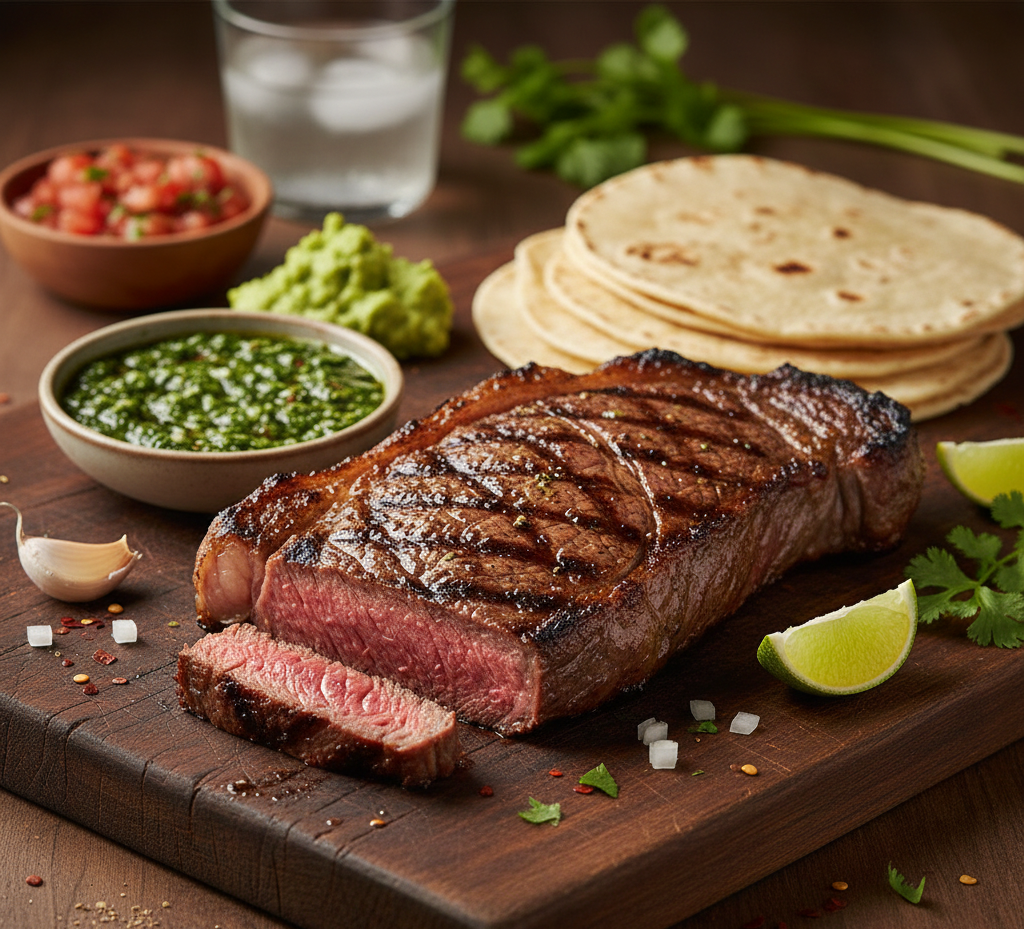
1. Skirt Steak (Arrachera): The Undisputed King.
This is the cut that defines grilled carne asada in the north. It’s long, flat, and covered in a thick, distinct grain.
- Why it’s perfect: It is the most flavorful cut on the cow, bar none. It’s richly beefy and marbled with fat that melts during cooking. That pronounced grain, when sliced correctly against it, creates short, tender fibers perfect for tacos.
- The Challenge: It is notoriously thin and can go from perfect to overcooked in 60 seconds. It demands attention.
- Pro-Tip: Seek out “outside skirt steak.” It’s thicker, wider, and more flavorful than the more common “inside skirt.” Your butcher can get it.
2. Flap Meat (Bavette): The Insider’s Choice.
This cut from the bottom sirloin is a staple in Mexican markets and is often labeled “carne para asar.” It’s my personal favorite for reliability.
- Why it’s a secret weapon: It has the intense beefy flavor and coarse grain of skirt steak but is thicker and more forgiving. It’s harder to overcook, making it ideal for feeding a crowd where timing is tricky. It slices beautifully.
3. Hanger Steak: The Butcher’s Secret.
This richly flavored, tender cut is gaining popularity. It has a loose, open grain and a deep, mineral taste.
- Why it’s elite: Incredible flavor and tenderness. It’s a single muscle, so it cooks evenly.
- The Caveat: There’s only one per cow, so it’s pricier and harder to find. A special-occasion choice.
4. The Wild Card: Pork Loin?
You might see grilled carne asada pork loin online. Let’s be clear: “Carne” means beef. Grilled pork is delicious (al pastor, anyone?), but calling it carne asada is a categorical error. However, the technique—a simple seasoning, high-heat grill—can be brilliantly applied to a butterflied pork loin for a fantastic result. Just don’t call it traditional.
| Cut | Best For | Key Characteristic | Cook Temp | Why It Works for Asada |
|---|---|---|---|---|
| Skirt Steak | The purist, the taco master. | Intense flavor, pronounced grain, thin. | Rare to Med-Rare (125-130°F) | Unbeatable flavor; perfect for thin slicing. |
| Flap Meat (Bavette) | The reliable crowd-feeder. | Beefy, coarse grain, thick & forgiving. | Med-Rare (130-135°F) | Flavor of skirt with more margin for error. |
| Hanger Steak | The special occasion showpiece. | Tender, loose grain, rich & mineral. | Med-Rare (130-135°F) | Luxurious texture and deep flavor. |
The Seasoning Strategy: Less is More, But Better
Forget the bottle of “carne asada marinade.” The classic seasoning is elegant in its simplicity. Here’s the framework I learned in Sonora, broken down by component:
- Salt (The Essential): Use coarse kosher salt. It’s not just for flavor; it draws out moisture to create a better crust. Apply it generously, at least an hour before grilling, or even right before. The “dry brine” hour helps, but it’s not mandatory.
- Acid (The Brightener): Fresh lime juice is iconic. But orange juice is the secret. Its milder acidity and subtle sweetness promote caramelization without “cooking” the meat like straight lime can. A 50/50 blend of orange and lime juice is perfection.
- Aromatics (The Soul): Fresh garlic, minced. Not powder. Black pepper, freshly cracked. Sometimes a splash of soy sauce (a non-traditional but brilliant umami cheat) or a dash of Maggi seasoning.
- The “Adobo” Question: Adobo grilled carne asada is a specific variation. Adobo here doesn’t mean the Filipino or Puerto Rican version. In Mexican grilling, it often refers to a paste of dried chiles (guajillo, ancho), vinegar, and spices. It’s a fantastic, deeper, more complex flavor profile than the citrus-garlic standard. It creates a beautiful, dark crust. If you see a recipe for adobo grilled carne asada mexican sugar, it’s likely using piloncillo (unrefined cane sugar) to balance the chiles’ heat—a great combo.
My Universal, No-Fail Mojo (enough for 2-3 lbs of meat):
- 1/3 cup fresh orange juice
- 2 Tbsp fresh lime juice
- 4 garlic cloves, minced
- 1 Tbsp kosher salt
- 1 tsp freshly cracked black pepper
- (Optional: 1 tsp ground cumin or 1 Tbsp chopped fresh oregano)
The Method: Whisk. Place steak in a dish. Pour over mojo. Let it sit for 30 minutes to 2 hours at room temperature, max. Do not marinate overnight. You are seasoning, not tenderizing.
The Grill: Technique Over Technology
Whether you use a Traeger pellet grill (set to high, for smoke and sear), a Weber kettle, or a gas grill, the principles are the same.
- Pat the Meat Dry. This is the most critical step nobody does. Remove the steak from the mojo and use paper towels to dry the surface thoroughly. A wet steak steams. A dry steak sears. This is the difference between a gray exterior and a dark, flavorful crust.
- High, Direct Heat. Your grill should be at least 450°F, with the grates clean and oiled. For charcoal, build a hot, single-layer fire.
- Sear, Don’t Steam. Place the dried steak on the hottest part of the grill. Do not move it. Let it develop a deep brown crust. For skirt steak, this is 3-4 minutes per side. For thicker flap meat, 4-5 minutes per side. You are aiming for an internal temp of 125-130°F for skirt, 130-135°F for flap. Use an instant-read thermometer. Visual guesswork fails every time.
- The Rest is Sacred. Transfer the steak to a cutting board. Do not slice it. Let it rest, loosely tented with foil, for at least 10 minutes. This allows the juices, which have been driven to the center by the heat, to redistribute. Slicing immediately releases all that moisture onto the board, leaving you with dry meat.
The Slice: The Final, Make-or-Break Cut
You’ve done everything right. Now you can ruin it in 30 seconds. You must slice against the grain.
Look at the cooked steak. You’ll see lines of muscle fiber running in one direction—this is the “grain.” Your job is to cut perpendicular to those lines. This severs the long, tough muscle fibers into short, tender pieces. For skirt and flap steak, this is non-negotiable. Slice into 1/4-inch strips. For serving as a whole steak, slice at a sharp angle against the grain.
Slice just before serving. Pre-slicing exposes maximum surface area to air, accelerating moisture loss.
The Taco Translation: From Asada to Taco
Grilled carne asada tacos are the ultimate destination. The architecture matters.
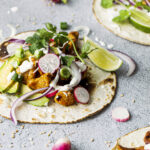
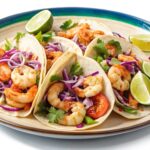
- The Tortilla: Warm corn tortillas, lightly charred on the grill or comal. They are the only authentic choice for this application. Their toasty flavor is part of the package.
- The Toppings: Keep it simple. The star is the beef. Diced white onion and fresh cilantro are mandatory. A spoonful of guacamole or a drizzle of crema is welcome. Salsa is essential—a bright salsa verde or a smoky salsa roja. The lime wedge on the side is for the eater to apply.
- The Build: Warm tortilla, a line of sliced asada, a sprinkle of onion and cilantro, a dash of salsa. That’s it. No cheese, no lettuce, no sour cream. This isn’t a Tex-Mex taco; it’s a celebration of the grill.
The Health & Nutrition Angle: A Pragmatic View
Is grilled carne asada healthy? In the context of a balanced meal, absolutely.
- High-Quality Protein: Skirt and flap are relatively lean, nutrient-dense cuts.
- Minimal Processing: You control the ingredients—no hidden sugars or preservatives.
- Smart Sides: Serve with beans, grilled nopales (cactus), and a salad.
To keep it lean, trim excess fat before cooking, go easy on the oil, and focus on the fresh, vegetable-based toppings. It’s a naturally high-protein, low-carb meal if you watch the tortilla count.
The “Traeger” & Pellet Grill Note
Using a Traeger or pellet grill for grilled carne asada skirt steak is a fantastic modern twist. You get consistent, wood-fired flavor with less babysitting. The key is to maximize the sear. Crank it to the highest setting (often 450°F or “High”) and preheat with the lid closed for 15+ minutes. Some models benefit from a sear kit or grill grates to boost surface temperature. The result can be exceptional—smoky, juicy, and perfectly cooked.
Conclusion: The Spirit of the Asada
Making true grilled carne asada isn’t about finding a magical marinade. It’s a discipline of selection, fire management, and restraint. It’s choosing the right cut, seasoning it simply but wisely, drying it for the sear, cooking it with confidence over fierce heat, and honoring it with a proper rest and slice.